A cleaning standard is not a promise to try hard. It is a written document that says what gets cleaned, how often, with what method, and how the work is recorded — so the result does not depend on who turned up that day.
If you are choosing someone to clean for an older family member, asking to see their standard is a fair question. Here is what one should contain.
Frequency by area, not by room
A standard sets frequency by risk and use, not by how big the room is. Touch surfaces and wet areas move to the top; low-traffic storage sits at the bottom.
| Area | Every visit | Rotating | Why |
|---|---|---|---|
| Bathroom and toilet | Yes | Grout, exhaust cover | Wet, high-touch and the most common fall location |
| Kitchen surfaces | Yes | Inside appliances | Food preparation and daily use |
| Touch points | Yes | — | Handles, switches, rails and remotes are touched constantly |
| Floors and walkways | Yes | Edges and corners | Trip risk and the surface everything falls onto |
| Bedroom | Yes | Under bed, wardrobe tops | Where the most hours are spent |
| Living areas | Yes | Skirtings, blinds, fans | Visible dust, but lower risk than wet areas |
| Storage and spare rooms | No | Monthly or on request | Low use, low risk |
Method specified per surface
The same product does not belong on every surface. A standard names the method, because the wrong one either fails to clean or damages what it touches.
| Surface | Approach | What goes wrong otherwise |
|---|---|---|
| Original timber floors | Damp mop, never wet; neutral pH | Water penetrates the seal and lifts the boards |
| Vinyl and lino | Neutral detergent, dried properly | Residue builds a film that becomes slippery |
| Ceramic tile and grout | Detergent with dwell time, agitation on grout | Wiping alone never reaches into the grout line |
| Acrylic shower base | Non-abrasive only | Abrasives micro-scratch the surface so it soils faster |
| Stainless steel | Wipe with the grain, dry immediately | Streaking and water spotting |
| Laminate benchtops | Damp wipe, dry at joins | Water at the joins swells the substrate |
Clearances the people doing the work hold
A standard is only as good as who is applying it. Every technician we assign to aged care and NDIS work holds all four of the following before they attend a home.
- NDIS Worker Screening Clearance
- NDIS Worker Orientation Certificate
- Working with Children Check
- National police check
The business also carries public liability insurance across every job attended.
Recording what was done
A standard that is not recorded is a standard nobody can check. Each visit produces a record of the tasks completed, which matters when a family member lives elsewhere and wants to know the home is being looked after.
We are cleaners, not carers
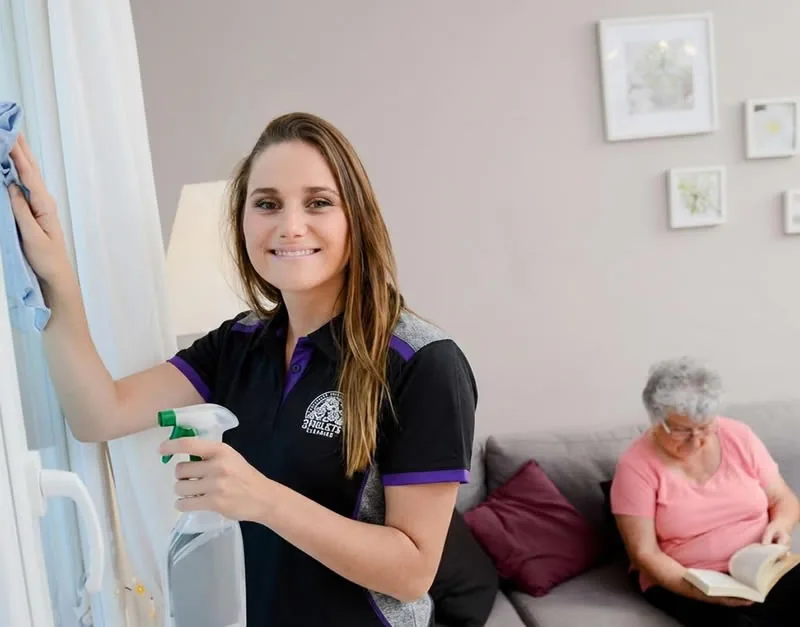
3 Piglets Cleaning is a cleaning business. We clean the home and keep it comfortable and easy to move around in. We do not provide personal care, nursing, medication support or any form of medical assistance, and nothing on this page should be read as health advice.
We provide aged care cleaning across Melbourne's eastern suburbs from our base in Croydon. If you would like to talk it through, get in touch — there is no pressure either way.
Frequently asked questions
Should I ask to see a cleaner's written standard?
Yes, and a serious provider will have one. If the answer is vague or verbal, that tells you the result will vary with whoever turns up.
Are aged care cleaning standards regulated for private homes?
Residential aged care facilities operate under their own regulatory framework. Cleaning in a private home is not separately regulated, which is exactly why the provider's own written standard and their workers' clearances matter.
What clearances should I expect?
For anyone working with older or vulnerable clients: a national police check as a minimum, and NDIS Worker Screening if they also work with NDIS participants.

3 Piglets Cleaning
We are a Croydon-based cleaning company serving Melbourne's eastern and south-eastern suburbs. Our technicians are police-checked and fully insured, and those working with NDIS participants and older clients hold NDIS Worker Screening Clearances. More about us.