Most household dusting moves dust around rather than removing it. Two things fix that: work top-down so gravity is on your side, and use something that traps dust instead of launching it back into the air.
Where the dust is actually coming from
| Source | What it produces | What reduces it |
|---|---|---|
| Textiles | Fibres from carpet, bedding, upholstery, clothing | Vacuum with a sealed filter; wash bedding regularly |
| Skin and hair | Continuous, from people and pets | Vacuum soft furnishings; groom pets away from carpet |
| Outdoor soil and pollen | Tracked in on shoes and blown through openings | Doormats inside and out; clean flyscreens and window tracks |
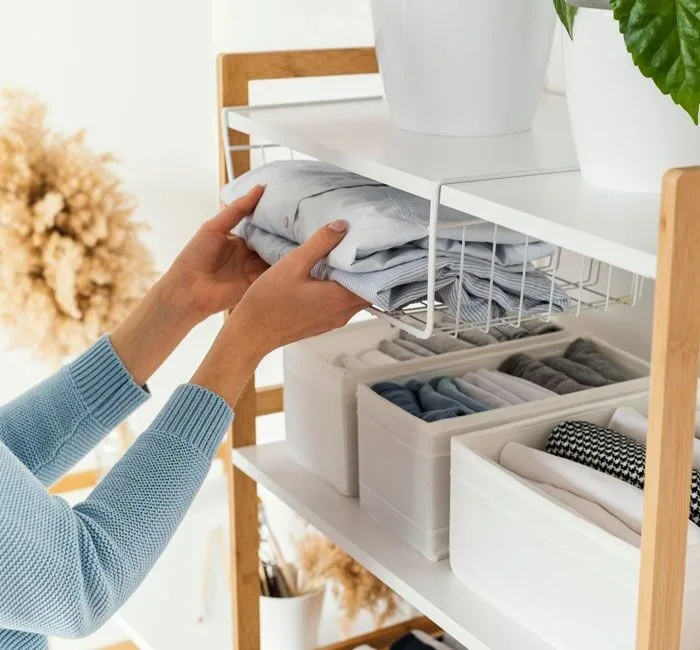
| Paper and cardboard | Fibre from books, boxes, storage | Store in closed containers rather than open shelving |
| Cooking | Airborne grease that dust bonds to | Run the rangehood; degrease the filter on a rotation |
| Heating and cooling | Redistributes settled dust through the house | Clean vents and filters at the start of each season |
Dust first, floors last
This is the rule almost every home gets backwards. Vacuuming and then dusting means everything you disturb lands on a floor you just cleaned. Dust falls; work with it.
Trap dust, do not launch it
A dry feather duster and a dry cloth both mostly redistribute dust into the air, where it settles again over the next few hours. That is why a room can look dusty again the next morning.
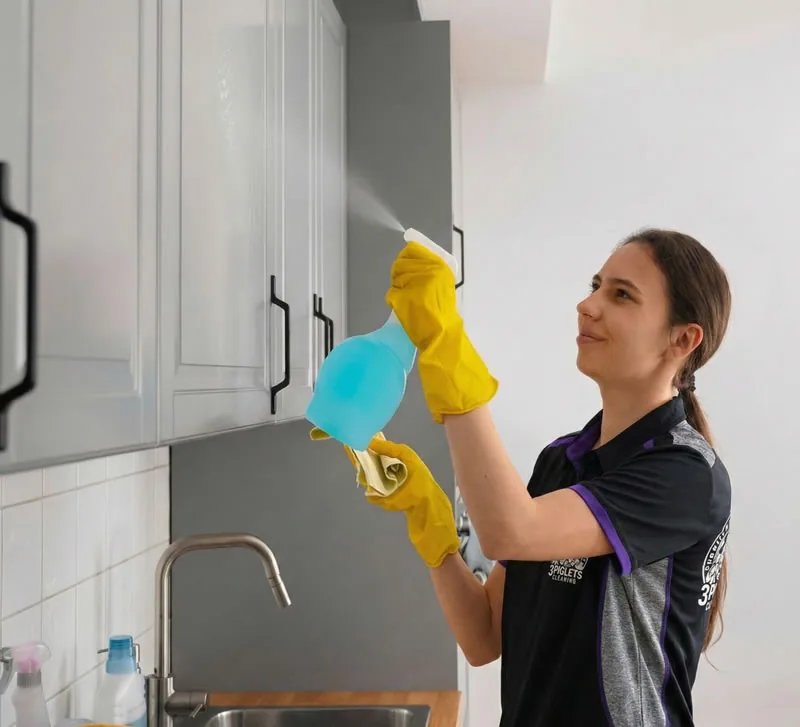
- Slightly damp microfibre, not dry — dust sticks rather than scatters
- Fold the cloth into quarters and turn to a clean face as it loads up
- Vacuum with a sealed filter before dusting hard surfaces in dusty rooms
- Vacuum upholstery and curtains, do not beat them
- Wash cloths rather than shaking them out
- Empty the vacuum outside, not over the kitchen bin
The places dust actually accumulates
Not the coffee table. These are the ones that quietly load up and then feed the rest of the house every time the heating comes on.
- Tops of wardrobes, door frames and picture rails
- Ceiling fan blades — the top face especially
- Air vents and return-air grilles
- Skirting boards, particularly the top edge
- Behind and underneath the bed
- Window tracks and flyscreen mesh
- The back of the fridge and under the kickboards
- Light fittings and lampshades
Which of these are weekly jobs?
Almost none of them. Skirtings, fans, vents and wardrobe tops belong on a monthly rotation inside a regular clean, or in a deep clean. Trying to do everything every week is why weekly cleans blow out.
Reducing dust at the source
Cleaning more often treats the symptom. A doormat inside and out, clean flyscreens, washed bedding, a rangehood filter that is not clogged, and closed storage instead of open shelving all reduce how much dust there is to remove in the first place.
We run regular weekly and fortnightly cleans across Melbourne's eastern suburbs. If you want to know what would suit your place, tell us about it and we will give you a straight answer.
Frequently asked questions
Should I dust before or after vacuuming?
Dust first, vacuum after. Dusting sends particles downward, and vacuuming first means doing the floor twice.
Are feather dusters any good?
For loose dust on delicate items, occasionally. For actually removing dust, damp microfibre traps it instead of launching it into the air.
Why does my house get dusty again so fast?
Usually because dusting is putting it into the air rather than removing it, and because the real sources — vents, flyscreens, soft furnishings — are not being touched.

3 Piglets Cleaning
We are a Croydon-based cleaning company serving Melbourne's eastern and south-eastern suburbs. Our technicians are police-checked and fully insured, and those working with NDIS participants and older clients hold NDIS Worker Screening Clearances. More about us.